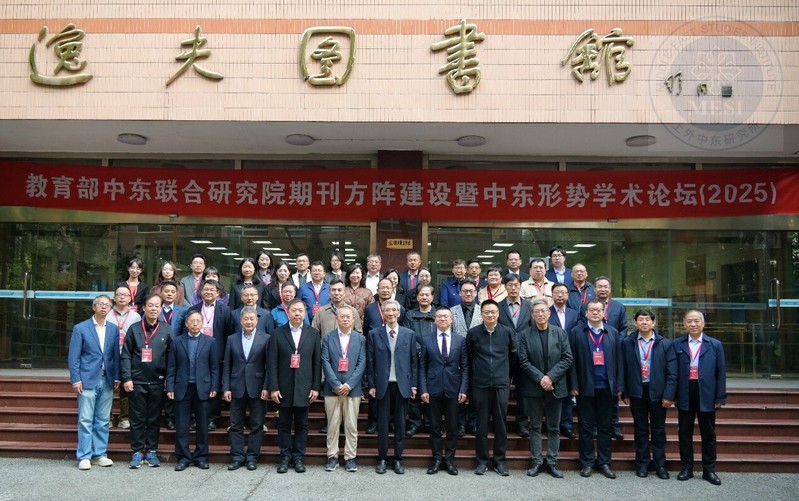
On November 22, 2025, the “Journal Development and Middle East Situation Academic Forum of Ministry of Education Joint Middle East Research Institute (2025)” was held at Shanghai International Studies University (SISU). The conference theme was “Thoroughly Studying and Implementing the Spirit of the Fourth Plenary Session of the 20th CPC Central Committee, and Strengthening the Development of an Independent Knowledge System for Middle East Studies.”
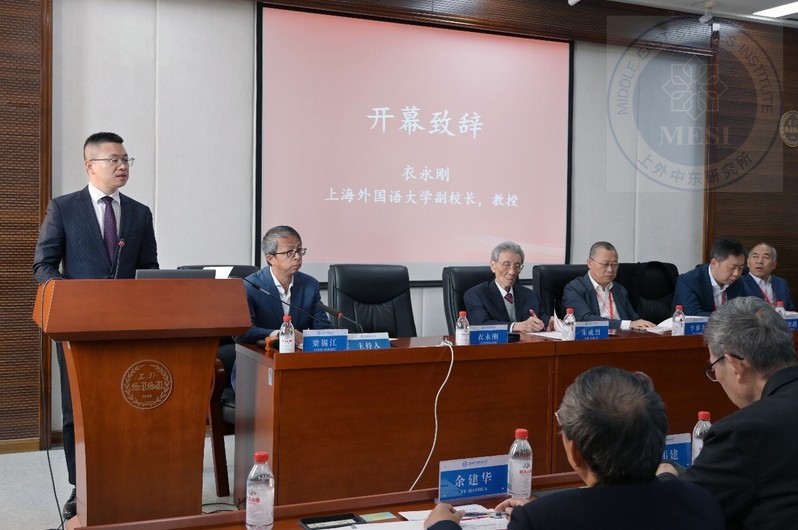
The opening ceremony and keynote address session were chaired by Liang Xijiang, Deputy Director of the Research Office at SISU. Vice President Yi Yonggang delivered the welcome address. He expressed sincere gratitude to the attending experts, noting that the Fourth Plenary Session of the 20th CPC Central Committee had charted a grand blueprint for national development while also setting a direction and higher standards for academic research and discipline development. He emphasized that Middle East Studies scholars should closely monitor international and middle east developments, actively align with national strategic needs, and continuously advance the construction of an independent knowledge system. Yi emphasized that the core of discipline development lies in knowledge production, with academic journals serving as vital vehicles for constructing academic discourse systems. Multiple departments, including the Ministry of Education, have issued documents encouraging young scholars to publish their research in domestic journals. Middle East Studies journals should better fulfill their role in cultivating young talent and further enhance their international influence.
In the keynote address segment, Professor Niu Xinchun, Academic Vice President of Ningxia University, conducted an in-depth analysis of the latest developments in China-U.S. relations, China-Arab relations, and U.S.-Arab relations. He noted that China-Arab relations in the new era are growing increasingly close, with strategic cooperation continuously deepening. Professor Liu Xinlu, Vice President of Beijing Foreign Studies University, conducted an in-depth analysis of China's relations with Gulf Arab states, focusing on the strategic importance of critical minerals in GCC countries. He proposed that China should further deepen strategic cooperation with GCC nations across multiple dimensions, including supply chain restructuring and rule-based governance.
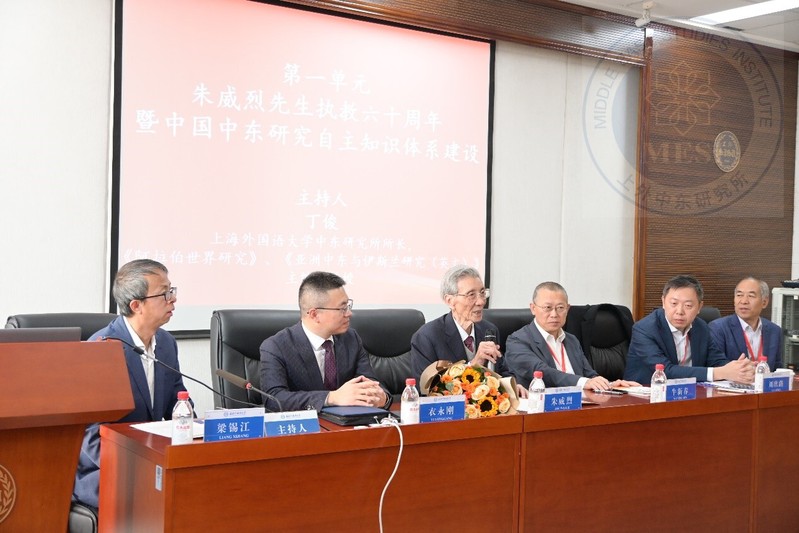
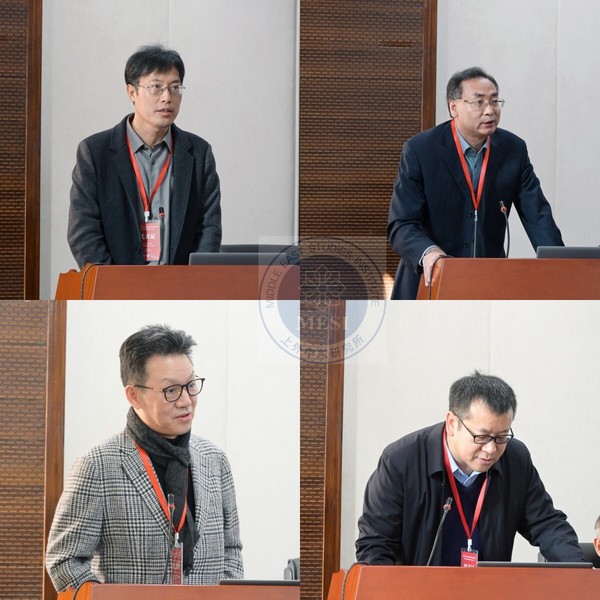
The forum featured four thematic sessions. The first session focused on “Professor Zhu Weilie's 60th Anniversary of Teaching and Building an Independent Knowledge System for Chinese Middle East Studies,” chaired by Professor Ding Jun, Director of the Middle East Studies Institute (MESI) of SISU. Four experts delivered keynote speeches on the topic, followed by open discussion and deliberation. Attendees unanimously agreed that Chinese academia should actively advance the development of regional and country studies knowledge systems from spontaneous to conscious efforts, breaking free from the constraints of Western theoretical frameworks to establish an academic system with Chinese characteristics. Drawing on the guiding principles of General Secretary Xi Jinping's important speeches, professor Zhu Weilie provided an in-depth interpretation of constructing an autonomous knowledge system for Chinese middle east studies, offering a systematic summary based on his extensive research experience.
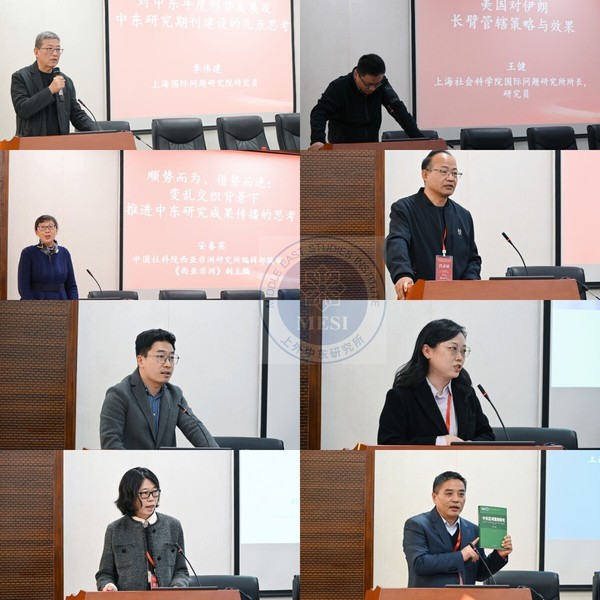
The second session focused on “Developing Academic Journals in Middle East Studies,” chaired by Li Yi, Deputy Editor-in-Chief and Editorial Director of Arab World Studies at the MESI of SISU. Experts offered recommendations on journal selection and content development, emphasizing the need for a balanced approach that integrates both academic rigor and contemporary relevance. They also analyzed the regional landscape in 2025, noting a trend toward greater equilibrium in the Middle East and enhanced autonomy among Arab nations.
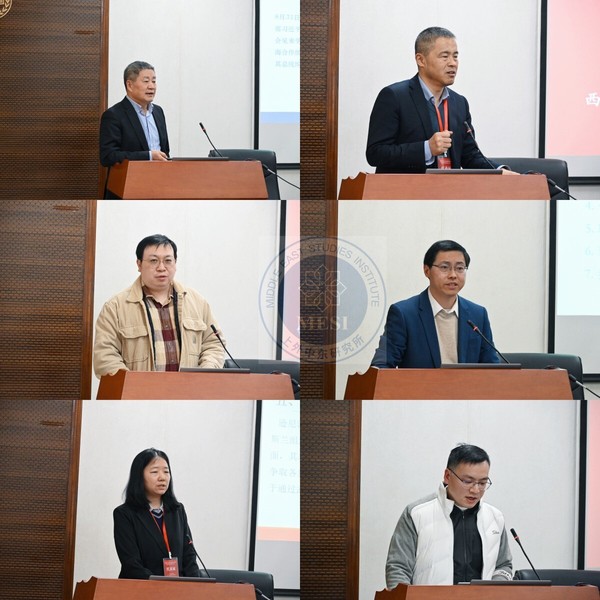
The third session focused on“Annual Dynamics in the Middle East,” featuring two sub-forums chaired by Professor Fu Zhiming, Vice Dean of Peking University's School of Foreign Languages, and Researcher Zhang Yuan at the MESI of SISU. Speakers noted that by 2025, the Middle East landscape will feature an offensive stance by the United States and a defensive posture by China and Russia, with the Palestinian-Israeli conflict showing signs of regression. Multiple scholars shared insights from various perspectives, including the weaponization of energy resources, the localization of Iranian studies, China-Turkey relations, and new developments in Syria.
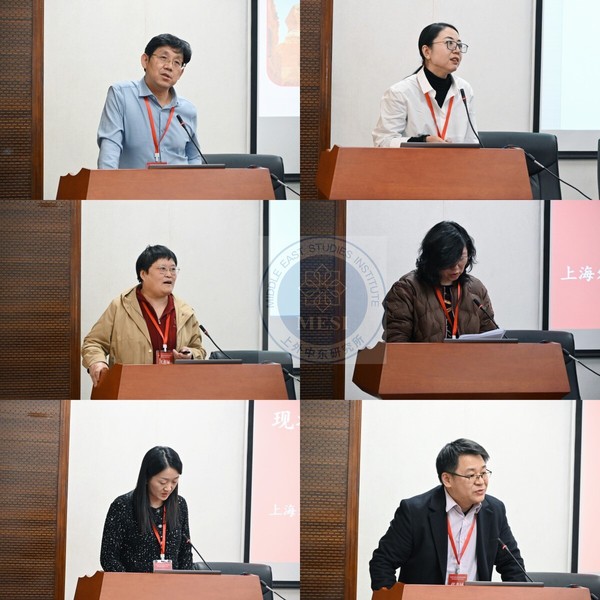
The fourth session focused on “China-Arab Relations and Civilizational Exchange in the New Era,” was chaired by Researcher Li Weijian from the Shanghai Institute for International Studies. Panelists explored dimensions including civilizational exchange, cultural differences, and educational cooperation, emphasizing that China-Arab relations depend on creative coexistence and constructive interaction. They also analyzed progress made by Arab nations in energy transition and educational collaboration.
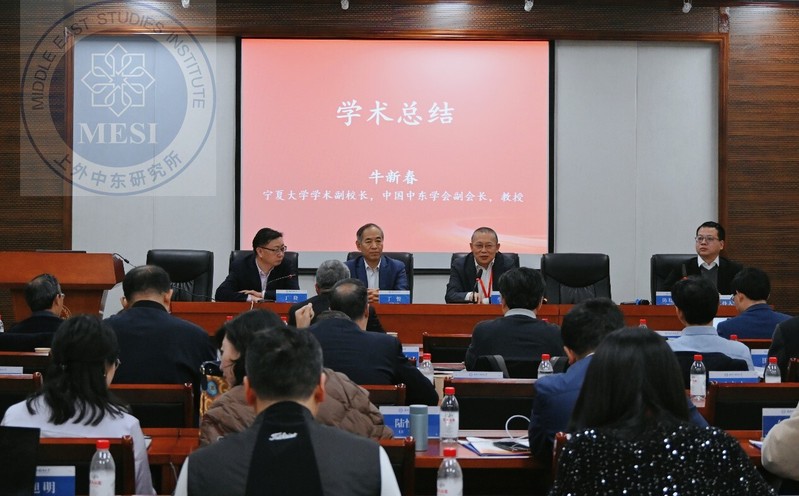
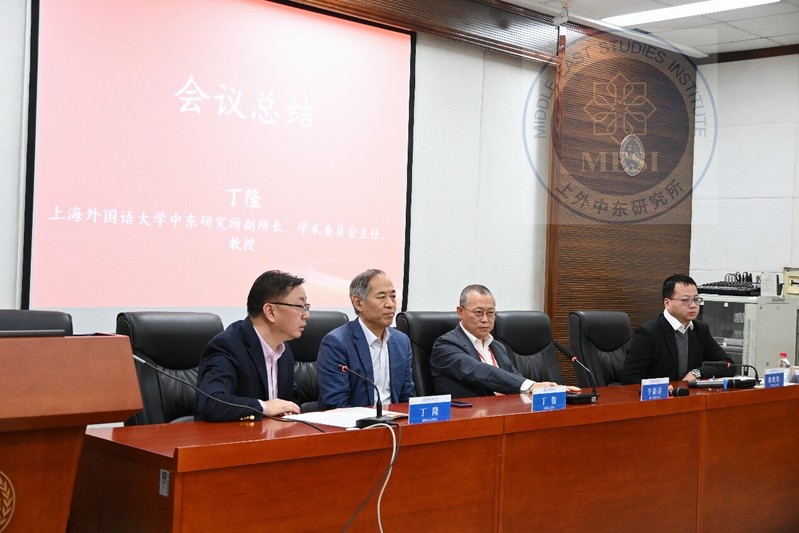
At the closing ceremony, Professor Niu Xinchun delivered an academic summary, noting that the forum had brought together numerous renowned experts in Middle East Studies from across China. He highlighted the conference's high political standing and academic caliber, emphasizing its significant achievements. Professor Niu also outlined institutional arrangements for the forum's further development, stressing that China's independent knowledge system should prioritize enhanced theoretical innovation. Professor Ding Long, Deputy Director at the MESI of SISU, delivered the closing remarks. He expressed gratitude to all participating experts for their attendance and contributions, noting that the institutionalization of this forum provides a vital academic platform for advancing the development of Middle East Studies journals and the construction of an independent knowledge system.
This forum serves as a key academic initiative of the Ministry of Education Joint Middle East Research Institute, spearheaded by the Middle East Studies Institute at Shanghai International Studies University. It plays a vital role in advancing the integration of domestic Middle East research resources and fostering the development of an academic community.