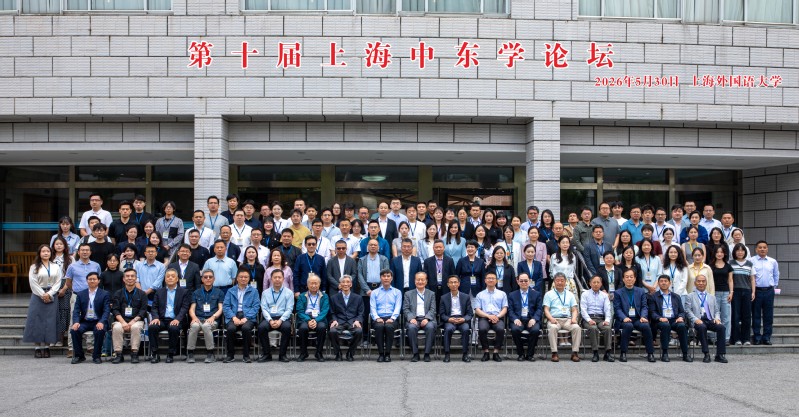
On May 30, 2026, the 10th Shanghai Middle East Studies Forum was held at Shanghai International Studies University (SISU)under the theme Building an Independent Knowledge System for Chinese Middle Eastern Studies.
The forum was co-hosted by the Middle East Studies Institute (MESI) of SISU, in collaboration with the Chinese Association of Middle East Studies, the Center for Turkish Studies at Shanghai University, the Center for Middle Eastern Studies at the Shanghai Institute of International Studies, the Center for West Asian and North African Studies at the Shanghai Academy of Social Sciences, and the Center for Middle Eastern Studies at Fudan University, with support from the Joint Research Institute for Middle Eastern Studies under the Ministry of Education.
Over 130 scholars gathered to discuss topics including Middle Eastern politics, economics, and security, exploring how to break free from Western-centric perspectives and establish an independent knowledge system grounded in Chinese experience.
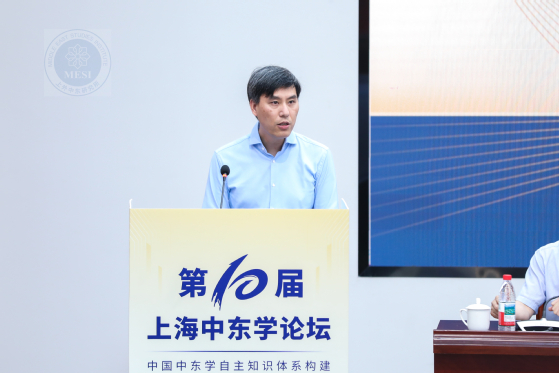
At the forum’s opening ceremony, Meng Zhongjie, President of the SISU, stated that building an independent knowledge system for Chinese Middle Eastern studies requires breaking free from the academic constraints of Western-centric perspectives and drawing upon Chinese experience and wisdom. China’s “Global Middle East” research is dedicated to building a community with a shared future for mankind and is peace-oriented.
Building an autonomous knowledge system for Chinese Middle Eastern studies was one of the key themes of this year’s forum. Participating scholars agreed that it is necessary to reflect on Western-centric narratives and construct an autonomous knowledge system from a “Global Middle East” perspective. The goal is to establish a Middle Eastern studies system with Chinese characteristics that serves China’s foreign policy and the building of a China-Arab community with a shared future.
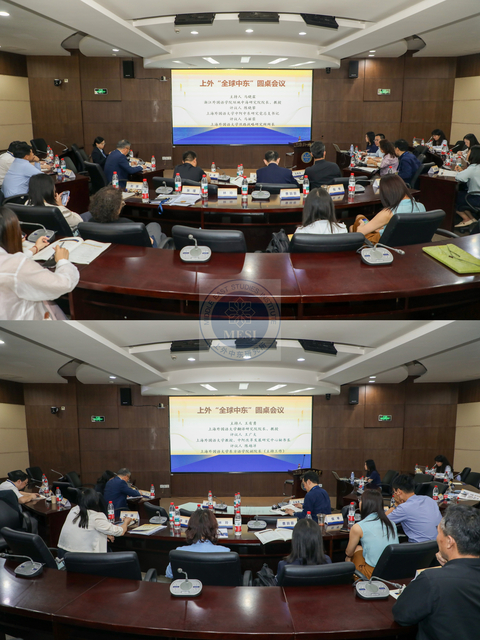
The SISU “Global Middle East” roundtable held on the same day focused on building an autonomous knowledge system for Chinese Middle Eastern studies to serve national strategies. Experts from the fields of journalism and communication, translation studies, linguistics, international education, law, area studies, finance and trade, as well as from the English and Spanish departments, engaged in in-depth exchanges with scholars who have long specialized in Middle East studies.
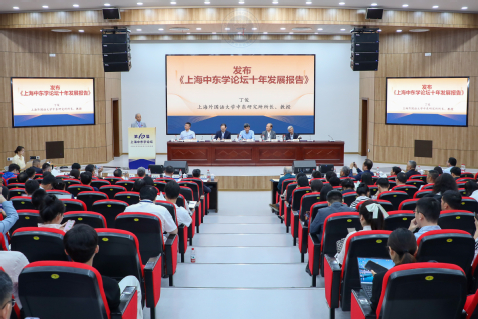
The forum also released the “Shanghai Middle East Studies Forum Decade Development Report (2017–2026).”